Number Match: Train your brain
- 4.9
- Rating
- 100.00K
- Installs
- Free
- Price

 Analysis by App-foxy
I found Number Match: Train your brain easiest to appreciate in a shared household moment: someone has a few quiet minutes, another person is using the television, and a quick puzzle is more suitable than a long game with a complicated story. This is a free Android trivia game from Greyfun Games, built around matching numbers and short bursts of mental activity. Its appeal is simple, but that simplicity is also what makes it practical on a device that may be used by more than one person.
My first impression was that it asks for very little commitment. You do not need to learn a fictional world, remember a large set of rules, or arrange a group before starting. The central idea is numerical matching, so the challenge comes from noticing relationships and making decisions rather than from collecting equipment or mastering a long control scheme. For me, that makes it a reasonable choice for a quick break, a waiting room, or a relaxed turn-taking session at home.
How Number Match fits into everyday shared use
In a household, a game like this works best when people treat it as a small mental activity rather than a competitive centerpiece. One person can play while another cooks, studies, or watches something else, and the game can be handed over without requiring a full explanation. A child who is curious about numbers, a parent looking for a light distraction, and an older relative who enjoys puzzles may all understand the basic premise quickly, even if they do not play with the same speed.
You May Also Like

 Pandora - Music & Podcasts
Pandora’s Music Is Easy to Start, but Harder to Recover
Pandora’s strength is its low-effort path from a seed to a station. Its weak spot is how much confidence it asks you to place in connection, setup, and quiet recovery.

 AccuWeather: Weather Radar
AccuWeather Review: A Quick, Clear Forecast for Everyday Decisions
For everyday plans, the best forecast is the one you can understand quickly. AccuWeather makes rain timing, radar, and local conditions easy to act on, with a few trade-offs.

 Hill Climb Racing
Why Hill Climb Racing Still Turns Crashes Into One More Run
A tiny car, a bumpy hill and one more upgrade: Hill Climb Racing keeps resurfacing because its simple chaos makes every near-miss feel personal.

 AliExpress - Shopping App
AliExpress Makes Global Shopping Feel Personal, but Shoppers Bear the Risk
AliExpress turns a global marketplace into a pocket-sized discovery engine. Its reach is useful, its shopping loop compelling, and its trade-offs easy to miss.

 Lords Mobile: Kingdom Wars
Lords Mobile Is a Kingdom-Building Routine, Not a Quick Match
A case-by-case verdict on the building, battles, device demands, and social commitments that make Lords Mobile rewarding for some players and exhausting for others.

 PDF Scanner app - TapScanner
TapScanner Makes Paperwork Easier to Capture, Check, and Share
TapScanner makes scanning with a phone feel less like a rescue operation and more like a dependable step in getting work done. Its capture tools are useful, though not flawless.
More From Our News Desk
View All News


I would not present it as a complete family game in the board-game sense. It is still a personal puzzle experience, and the value comes from the player’s own choices. There is no reason to assume that everyone will enjoy comparing results or taking turns. Some people prefer a shared quiz with conversation, while others want a solitary challenge. Number Match is closer to the second group, although its straightforward format makes informal sharing easy.
A realistic use case is a short evening pause. If I have ten minutes before leaving the house, I can open a number puzzle instead of starting a game that demands a longer session. If another person wants the device, the handoff is uncomplicated because the activity does not depend on a complicated control layout. That makes it more suitable for a common tablet or phone than a game that requires a personal account, a headset, or a precise sequence of setup steps.
The trade-off is that shared use can blur progress and personal habits. If several people use the same device, each player should agree on whether they are simply taking turns or trying to preserve a particular run. A puzzle app is more enjoyable when nobody accidentally interrupts another person’s concentration. I found that a simple household rule—finish the current round before passing the device—does more for cooperation than trying to turn every session into a contest.
What the first session feels like
The game’s store short description is “Number Match,” and that accurately signals the kind of attention it requires. I approached it expecting a light puzzle rather than a broad trivia library, and that expectation matters. The experience is not about answering questions from history, science, or entertainment. It is about looking at numerical possibilities and deciding which matches make sense, so players who want traditional quiz questions should choose a different type of trivia game.
That narrow focus is useful for concentration. I can pay attention to the board without switching between several unrelated categories. It also means the game may become repetitive for anyone who needs constant novelty. Number-based puzzles are naturally reusable, but the player’s enjoyment depends on whether finding the next match remains satisfying after the basic pattern becomes familiar.
I recommend starting without rushing. The obvious match is not always the most useful one to take first in a puzzle built around numerical relationships. Even when a move looks correct, it is worth checking how it affects the remaining choices. This is one of the first practical lessons I took from the game: speed can feel rewarding, but careful scanning is usually the better habit when the board becomes less obvious.
Boundaries before putting it on a shared device
Because the game is free and rated Everyone, it is easy to consider for a household device. The age label makes it broadly approachable, but it should not be treated as a complete substitute for adult judgement. A younger player may understand the matching idea while still finding the visual pressure or repeated decision-making tiring. An older player may enjoy the challenge but prefer a larger screen or more time to inspect the numbers.
I would introduce it by explaining what it is and what it is not. It is a compact number puzzle, not a learning curriculum, a formal mathematics lesson, or a guaranteed way to improve memory. That distinction is important when a child asks whether playing it will make them better at school. It can encourage attention and pattern recognition, but I would keep those benefits in proportion and avoid making educational claims that the game itself does not establish.
On a shared phone, boundaries are also about access. The owner should decide who may use the device, when it is available, and whether a player can continue a session later. Since the game is installed on the device rather than being a physical object that can be put away, a clear routine helps prevent small disagreements. A short agreed window is often better than leaving the game open indefinitely and asking everyone to negotiate after the fact.
There is another boundary that matters for adults: do not use the game as a test of intelligence. A slower player is not necessarily less capable, and a quick move does not automatically mean better reasoning. If family members compare sessions, I suggest discussing the choices rather than judging the person. That approach keeps the puzzle recreational and avoids turning a quiet game into an unwanted performance check.
Coordinating turns without overcomplicating the experience
Number Match is well suited to informal coordination because the basic activity is easy to describe. In my experience, the smoothest arrangement is to let each person have a complete short session instead of switching after every move. Constant handoffs break concentration, while a full session gives the player enough time to understand the board and make decisions in their own style.
If two people want to play side by side, one useful method is to discuss possible matches before the active player touches the screen. This turns the game into a conversation without pretending that it is a built-in multiplayer experience. The active player still makes the final decision, while the other person practices spotting patterns. It works particularly well when one player is new and wants guidance, although advice should remain optional rather than becoming back-seat playing.
For a mixed-age household, I would also vary the goal. A younger player might focus on identifying any valid match, while an experienced player might try to plan several moves ahead. That keeps the same puzzle accessible without requiring different versions of the game. The important point is not to assume that everyone should use the same standard. A shared device can support different levels of engagement if the household agrees that learning and enjoyment matter more than winning.
One limitation is that a personal puzzle does not automatically create a reliable record of who played. I would therefore avoid promising a formal household leaderboard or assuming that progress can be separated neatly between users. If tracking matters, family members may need to use an agreed informal method, such as noting their own goals outside the game. That is a small inconvenience, but it is worth recognizing before several people begin using the same installation.
Coordination also affects concentration. A player who is interrupted every few seconds may make poor choices for reasons unrelated to the puzzle. I prefer to set the device down only after a natural stopping point, then pass it on. This simple habit makes the game feel calmer and reduces the chance that a shared session becomes frustrating.
Age, trust, and realistic expectations
The Everyone content rating makes Number Match a comfortable candidate for broad household use, especially when compared with games built around combat, frightening themes, or mature conversation. Its numerical focus is also less likely to create arguments about suitable subject matter. Still, the age label describes content suitability, not the quality of every play session. A game can be appropriate for a child and still be too difficult, too repetitive, or simply uninteresting for that child.
Trust on a shared device comes from transparency. I would show a younger player where the game is located, explain that the device belongs to the household, and make clear that they should ask before changing anything else on it. I would not assume that a simple puzzle needs unrestricted access to the rest of the phone or tablet. The game itself may be harmless in tone, but device boundaries remain a separate responsibility for the owner.
Adults may also want to decide whether the game belongs in a quiet routine or in free play. For someone who is trying to reduce screen time, a short puzzle can be easier to contain than an endless social or action game, but it is still screen use. I found it more useful as a deliberate pause than as something left running in the background. The player should be able to stop without feeling that they are abandoning a team or losing a social obligation.
For older relatives, the main question is comfort. Number matching can be appealing because it does not require fast character movement or a complicated virtual world. However, a smaller screen, dense arrangement, or quick decision cycle may make it less comfortable for some players. I would let the person try it directly and adjust the device position, brightness, or text visibility where possible, rather than deciding from the age rating alone.
Trust also means being honest about the game’s purpose. The store summary describes it as a puzzle intended to keep the mind sharp, and I read that as a description of the experience rather than a medical promise. I would recommend it as a pleasant way to exercise attention, not as treatment, diagnosis, or proof of cognitive improvement. That distinction is especially important when a family member is looking for something connected to memory or mental health.
Where it stands beside other trivia and puzzle choices
Compared with a conventional trivia app, Number Match offers less variety in subject matter but more consistency in the type of thinking it asks for. A general quiz is better when I want conversation, surprising facts, or a broad challenge that changes from one question to the next. This game is better when I want to stay with one visual problem and work through it at my own pace.
Compared with a crossword or word puzzle, it avoids dependence on spelling and vocabulary. That can make it a better fit for someone who enjoys logic but does not want to search for words or remember obscure definitions. On the other hand, word-game fans may find the number focus too narrow. The choice comes down to what kind of mental friction feels enjoyable: language recall, general knowledge, or numerical pattern recognition.
It also differs from a large strategy game because the learning curve is much smaller. There is no need to understand a long economy, a set of characters, or a campaign structure before the decisions become meaningful. That is a strength for quick household use. The weakness is that players who want deep planning, stories, or a sense of long-term construction may outgrow it quickly.
One non-obvious advantage is that the narrow rule set makes it easier to talk through decisions with another person. In a complex game, explaining a move can take longer than making it. Here, a parent or friend can ask why a match was chosen and help the player inspect alternatives. That makes it useful as a low-pressure conversation starter, even though it is not designed as a formal teaching tool.
Another trade-off is replay motivation. A focused number puzzle can remain satisfying because each board demands attention, but it does not offer the same emotional variety as a quiz that jumps between subjects or a game with changing objectives. If I were choosing one app for a long journey, I would want to know whether I personally enjoy repeating this style of challenge. If I wanted several kinds of entertainment in one place, I would choose a broader alternative.
Practical details before installing
Greyfun Games lists the game as free, which removes the main financial barrier for trying it on a household device. I still recommend checking the installation screen and the device’s normal settings before handing the phone to a child, because the price of a game does not define how a shared device should be managed. The sensible approach is to install it through the owner’s account and keep responsibility for the device with the adult who controls it.
The game was released on November 28, 2023, and its current version is 1.11. It requires Android 6.0 or later, so compatibility is broad for many older Android devices, though I would still check the specific phone or tablet before planning a family session. A device that technically supports the operating system may not provide the most comfortable screen size or responsiveness for every player.
The public response gives me a moderate reason to try it rather than a reason to treat it as universally loved: the average rating is 4.2 from over a hundred ratings. That suggests a generally positive reception while leaving room for individual differences. The game has also passed the hundred-thousand-install mark, so it is not an obscure experiment with no audience at all. I would use those figures as context, not as a substitute for deciding whether numerical puzzles suit the people in my home.
Before installing, I would ask three practical questions. Does the shared device run Android 6.0 or newer? Is there enough uninterrupted time for a player to concentrate? And does the intended player enjoy number relationships more than trivia questions or word puzzles? If the answer to the last question is no, the game may be perfectly functional and still be the wrong choice.
Who should choose it, and who should pass?
I recommend Number Match to someone who wants a free, focused puzzle that can be understood quickly and played in short sessions. It is particularly suitable for a person who likes numbers, prefers quiet concentration, and does not need a story or a social competition to stay interested. It also makes sense for a household that wants a simple game available on a common device without introducing mature themes.
I would be more cautious for a player who expects a full trivia experience. The label may place it near trivia in an app catalog, but the actual appeal is numerical matching rather than a rotating bank of general-knowledge questions. Someone seeking facts, categories, timed quiz rounds, or lively group discussion will probably be happier elsewhere.
I would also skip it for a player who dislikes repetition or needs a strong sense of progression. The compact design is its main convenience, yet that same compactness limits the reasons to return for people who want new characters, locations, or elaborate objectives. It is not a weakness for the right audience, but it becomes obvious when the player’s preferred reward is variety rather than refinement of a single skill.
For families, I would choose it when the goal is a calm, optional activity—not when the goal is to occupy several people at once. One person can play while others observe or suggest, but the game should not be sold as a substitute for a multiplayer party title. Keeping that expectation clear avoids disappointment and makes the shared-device experience more respectful.
My final household verdict is positive with sensible limits. Number Match: Train your brain earns a place as a compact number puzzle for quiet breaks, casual turn-taking, and players who enjoy spotting numerical relationships. Its free availability, Everyone rating, broad Android compatibility, and straightforward concept make it easy to try. I would keep expectations modest, protect each player’s concentration, and choose a general quiz or richer strategy game when variety and group interaction matter more than focused matching.
FAQs for Number Match: Train your brain
01What is Number Match and how does it work?
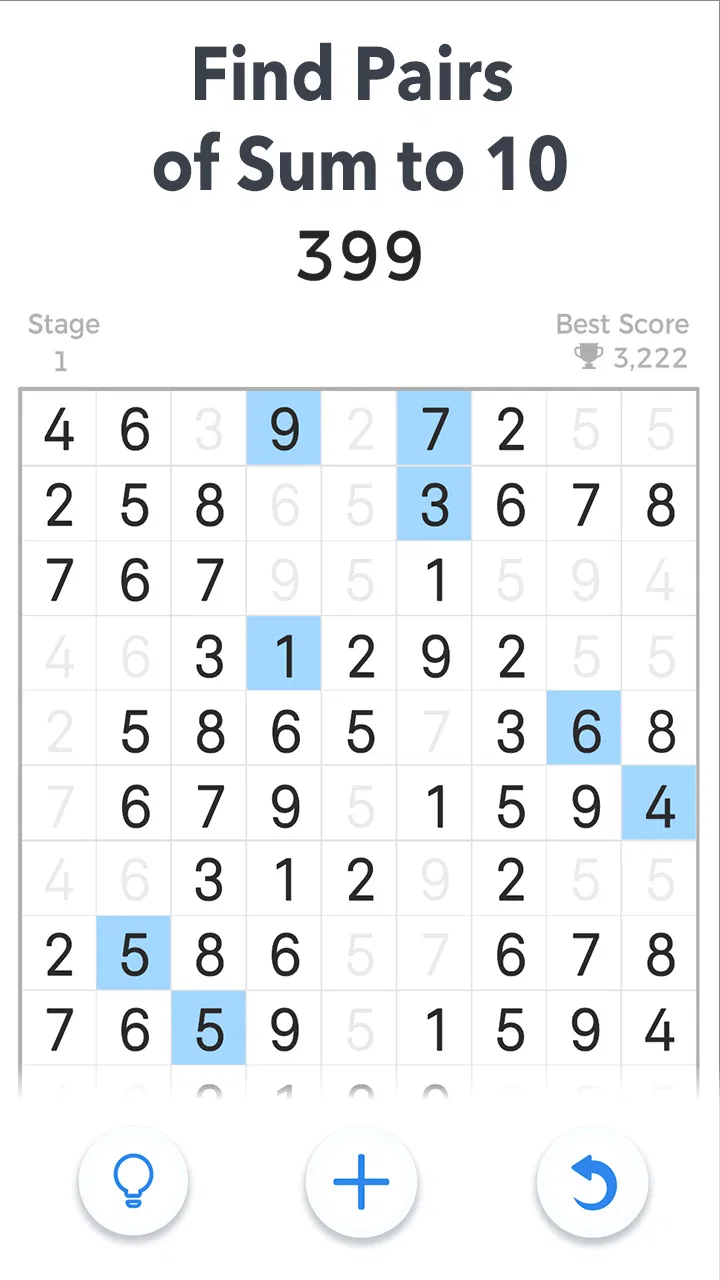
Number Match is a puzzle game designed to enhance cognitive skills by challenging players to find pairs of numbers that add up to a specific target number. The game is played on a grid, and as you match numbers, new numbers appear to keep the challenge ongoing. It's a great way to train your brain while having fun.
02Is Number Match suitable for all age groups?
Number Match is designed for players of all ages. Its intuitive interface and adjustable difficulty levels make it accessible for children, while the increasing complexity ensures it remains challenging for adults. It’s a family-friendly game that promotes logical thinking and problem-solving skills.
03Does Number Match require an internet connection to play?
Number Match can be played offline, making it a perfect companion for long journeys or areas with limited connectivity. However, some features, such as leaderboards or syncing progress across devices, may require an internet connection to function properly.
04Are there any in-app purchases in Number Match?
Yes, Number Match offers in-app purchases that enhance the gaming experience. These may include additional hints, removing ads, or unlocking special features. While the game is free to download and play, these optional purchases can provide additional convenience and enjoyment.
05How does Number Match help improve cognitive skills?
Number Match enhances cognitive abilities by engaging players in exercises that require critical thinking, pattern recognition, and numerical calculation. Regular gameplay can lead to improved memory, better concentration, and faster problem-solving skills, making it both an entertaining and beneficial activity.
Pros
- Engaging puzzles enhance cognitive skills.
- Simple interface is user-friendly.
- Variety of levels keeps gameplay fresh.
- Offline mode for on-the-go play.
- Minimal ads enhance user experience.
Cons
- Limited hints in free version.
- In-app purchases can be pricey.
- No multiplayer mode available.
- Repetitive music can be distracting.
- Occasional minor bugs on updates.

Number Match: Train your brain
Gallery